
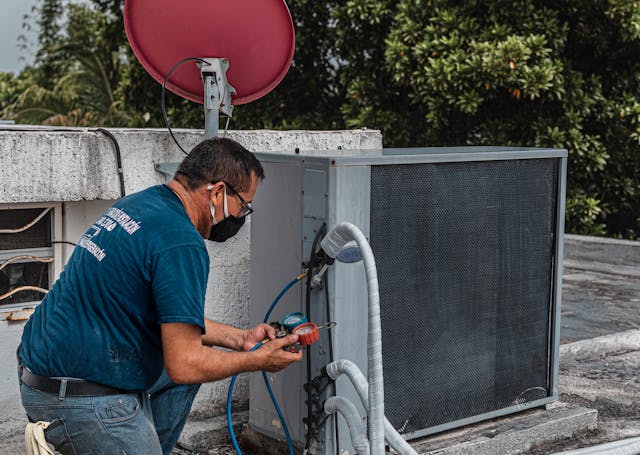
Your HVAC or Heating, ventilation, and Air Conditioning system is what will help you to keep your home cool or warm during summer or winter months. Nonetheless, as a complex system, it may be in need of costly repair work once a problem develops. Learning to prevent HVAC problems and how to recognize them will save you money, prolong the service life of your system, and perform more efficiently.
Table of Contents
1. Clogged or Filthy Air Filters
The problem: Air filters capture dust, pollen and debris. When they become clogged, they restrict the amount of air flow which then causes your HVAC system to work extra hard. It may raise electricity costs and burn out parts.
Prevention: Clean or change your filters once a month 3 times if you use them regularly depending on the kind of filter used.
2. Refrigerant Leaks
The issue: Your AC may lose its cooling capacity as a result of low refrigerant levels, and become overheated. Leaks may also get into the compressor which is costly to repair.
Prevention: Conduct regular HVAC inspection from Northern Colorado HVAC once a year to ensure that there is sufficient amount of refrigerant and fix leaks fast.
3. Thermostat Issues
The issue: Defective or old thermostats may lead to unequal temperatures, repeated thermostat or system cycling or system breakdown.
Prevention: Buy a programmable or smart thermostat to have more control over it and calibrate on a regular basis.
4. Electrical Problems
The issue: Frayed wires, burned out fuses or blown-up breakers will prevent your HVAC system to operate at all. An electrical fault can also prove a hazard.
Prevention: During regular maintenance, have a licensed technician check on the electrical connections in order to ascertain that everything is tight and in its place.
5. The Frozen Coils Inside the Evaporator Culminating in Frozen Coils
The issue: Evaporator coils may presence poor cooling due to freezing on the evaporator coils due to poor airflow, dirty coils or low refrigerant.
Prevention: Filters should be clean, include adequate refrigerant and have coil cleaning once a year.
6. Strange Noises
The glitch: Grinding, banging or squealing noises could indicate that some parts are coming loose, the bearings are worn out, or there is something wrong with the motor. Failure to observe these noises may result in the costly repair.
Prevention: The sooner you call an HVAC professional after hearing peculiar sounds the better as prevention saves money, as compared to replacing the entire unit.
7. Poor Airflow
The issue: Unbalanced heating or cooling can be caused by blocked vents or duct leakage or a failing blower motor.
Prevention: Clear the vents, seal ducts and have your blower motor checked during the maintenance visits.
8. Water Leaks
The issue: Clogged condensate drain and/or poor drain pan can result in water build-up that causes mould and water damage.
Prevention: The drain of the condensate line always needs to be kept clean as well as inspecting the drain pan to ensure that there are no cracks.
Final thoughts
This can be prevented by routine maintenance, repair, and preventive measures on most HVAC issues. Preventing a costly breakdown by offering annual inspections, filter replacements, and resolving problems sooner, makes the equipment more efficient and the indoor air quality better. A properly maintained HVAC system will work faithfully and cost efficiently even longer.