
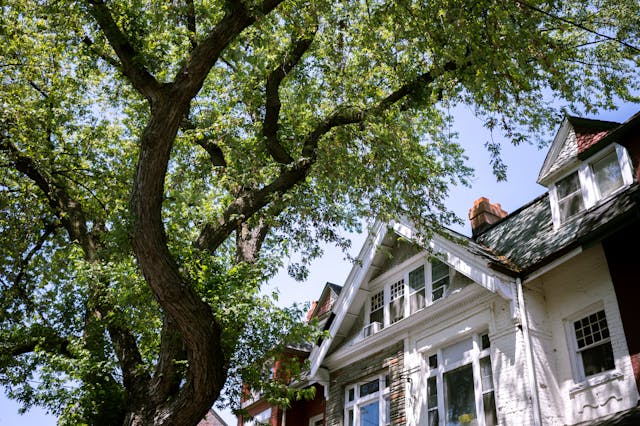
The trees on a residential property spend years being completely ignored, and then one day become the most urgent thing on the agenda. The branch over the fence that came down in last week’s storm. The root has found the sewer line. The neighbour who would like a word about the hackberry that is clearly dying and leaning toward them. Trees move from background to foreground in ways that are almost always expensive and almost always have warning signs that got missed somewhere along the way.
Table of Contents
1. Know What Is on the Property Before Something Goes Wrong
Most homeowners know their trees at the level of big ones, small ones, and the one near the fence. A residential tree services in Dallas assessment goes considerably further. Species, structural condition, proximity to structures, root zone health, disease or pest pressure. This is the baseline that makes every subsequent decision easier.
Knowing early on that the giant pecan has a co-dominant stem that should be cabled, that the elm has beetle damage, or that the roots coming toward the foundation have already reached the necessary distance is valuable information to have before it becomes urgent and expensive.
2. Property Lines and Tree Ownership Are More Complicated Than They Look
A trunk entirely on one side of the property line belongs to that owner. A trunk crossing the line is legally shared in most Texas jurisdictions. Branches that cross and cause damage occupy a legal grey area that varies by circumstance and, occasionally, by how well the neighbours get along.
Residential tree services in Dallas providers encounter tree-related neighbour disputes with some regularity. The majority of them could have been avoided with an early documented assessment of the tree’s condition. Knowing the tree was already compromised before the branch came down changes the conversation.
3. Timing Tree Work Correctly Is Not Optional
Oak wilt spreads through fresh wounds during the spring and early summer months when the disease vectors are active. Elm bark beetles, which transmit Dutch elm disease, follow their own seasonal pattern. These are not marginal concerns for specialists. They are basic scheduling practices that any residential tree services company in Dallas worth hiring follows as standard practice.
A homeowner who hires the cheapest available crew to prune oaks in June and then loses the tree to oak wilt has not saved money on the pruning job. The math on that situation works out badly.
4. Emergency Situations Require Professional Response, Not Improvisation
A partially failed tree after a storm is not a DIY assessment situation. The remaining structure may be under tension that is invisible from ground level. What looks stable can change rapidly as damaged wood continues to dry and the load redistributes. Residential tree services in Dallas companies with emergency response capability have the equipment and training to evaluate and address hazardous trees safely.
Conclusion
A baseline examination, planned maintenance around the right seasonal windows, clarity about property lines and legal requirements, and a specialist to call when something goes wrong are all required for tree management on a residential property. The properties where tree problems become expensive events are the ones where the trees were background until they absolutely were not.