
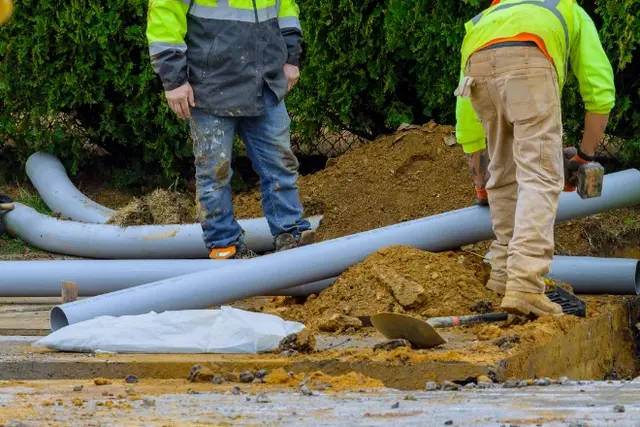
When winter hits the Denver Metro area, homeowners in Englewood face a unique set of challenges and none is more financially or logistically stressful than a failing sewer line. The constant freezing and thawing of the ground, combined with our notorious expansive clay soil, makes the decision to replace your sewer lateral a high-stakes one.
For decades, the only solution to a cracked, root-infested, or misaligned pipe was traditional dig-and-replace. Today, however, modern trenchless methods offer a revolutionary alternative, especially vital in a climate defined by the damaging freeze-thaw cycle. Choosing the right method for your sewer line replacement in Englewood isn’t just about cost; it’s about engineering a system that can withstand the extreme environmental pressures of our Colorado seasons for the next fifty years.
This comprehensive guide breaks down the two main replacement methods and compares their long-term viability, cost implications, and logistical headaches specifically within the context of Englewood’s weather and soil.
Table of Contents
The Freeze-Thaw Factor: Englewood’s Silent Threat
The greatest enemy of an old sewer line in Englewood is not just age, but movement. The area’s climate creates a perfect storm of geological stress:
- Freeze-Thaw Cycling: As winter temperatures fluctuate above and below freezing, the water content in the soil repeatedly freezes (expanding) and thaws (contracting). This movement causes the ground to heave vertically and laterally.
- Expansive Clay Soil: Much of the soil in the Denver Front Range contains high concentrations of Montmorillonite clay. This clay dramatically swells when wet and shrinks when dry. When combined with the freeze-thaw cycles, the clay acts like a slow-motion geological vice, putting immense, uneven pressure on buried infrastructure.
- Shear Stress: Older, brittle sewer pipes often made of clay tile or cast iron cannot flex under this stress. The constant, uneven movement causes joints to offset and pipes to crack or “shear” in half, leading directly to leaks, backups, and the eventual need for a total sewer line replacement in Englewood.
A successful sewer line replacement in Englewood must prioritize flexibility, strength, and minimal disturbance to the existing soil structure. This is where the choice of replacement method becomes critical.
Traditional Dig-and-Replace: High Risk for High Movement
Traditional excavation involves digging a continuous, deep trench from your home’s foundation to the municipal sewer main, exposing the entire length of the damaged pipe.
The Procedure
- Full Excavation: Heavy equipment is used to tear up lawns, landscaping, sidewalks, and even driveways to reach the buried lateral.
- Pipe Removal: The old pipe is removed, and a new trench is often dug deeper to ensure the new pipe has a proper “bed” of gravel or sand.
- Backfill & Restoration: The new pipe is laid, and the trench is refilled (backfilled) with the excavated clay and topsoil.
Vulnerability in Englewood’s Climate
While traditional excavation is necessary if a pipe has completely collapsed, it carries significant long-term risk in our climate:
- Compaction Failures: The greatest vulnerability is the backfill. It is nearly impossible to compact expansive clay backfill to the same density as the surrounding undisturbed soil. This results in the soil above the new pipe settling unevenly over the next few seasons.
- Repeat Failure Risk: Uneven settling creates new points of stress on the new pipe, leading to future misalignment or shear breaks. For an Englewood homeowner, this means the threat of needing another sewer line replacement or major repair down the line remains significantly higher.
- Winter Work Surcharges: Performing traditional excavation during frozen or semi-frozen ground conditions drastically increases labor costs due to the need for specialized equipment (like ground heaters or hydraulic hammers) and slower work speed.
Trenchless Technology: The Weather-Resistant Solution
Trenchless methods were engineered to minimize ground disturbance, a feature that proves uniquely advantageous in dealing with the freeze-thaw and expansive clay conditions of Englewood.
Method 1: Pipe Bursting (The Complete Replacement)
Pipe bursting is a full replacement that eliminates the need for extensive trenching.
- Procedure: A small access pit is dug near the house and a second near the street connection. A cable with a conical bursting head is pulled through the old pipe. As it moves, the bursting head shatters the old pipe and simultaneously pulls a brand-new, seamless High-Density Polyethylene (HDPE) pipe into its place.
- Climate Advantage: The new pipe is a single, jointless segment of HDPE. This material is flexible and resilient. Unlike brittle materials, HDPE can endure the constant shifting, heaving, and lateral pressure exerted by Englewood’s expansive clay without cracking or offsetting. It floats within the existing soil envelope, adapting to movement rather than resisting it.
- Cost Advantage: Because it bypasses the need for re-compacting unstable clay, the sewer line replacement is inherently more stable and less prone to future settlement issues.
Method 2: Cured-in-Place Pipe (CIPP) Lining (The Rehabilitation)
CIPP lining is more of a repair than a full replacement, creating a new pipe inside the old one.
- Procedure: An epoxy-saturated flexible tube is inserted into the damaged pipe through a single access point. The tube is inflated and cured (often with heat or steam) to create a rock-hard, seamless, non-corrosive “pipe-within-a-pipe.”
- Climate Advantage: CIPP lining creates a jointless, seamless internal structure that stops all root intrusion and spans small voids that may have been created by the freeze-thaw cycle. Its smooth interior also improves flow.
- Limitation: CIPP is less effective if the old pipe has large offsets or has completely collapsed common results of severe freeze-thaw damage over decades. It’s best used for pipes with numerous cracks or root issues but still maintain a relatively straight path.
The Financial & Logistical Cost Comparison for an Englewood Homeowner
When evaluating the total cost of a sewer line replacement in Englewood, the price tag on the bid is only one part of the equation. Homeowners must consider the “cost of restoration” and the “cost of risk” when making a long-term investment in their property.
Initial Upfront Costs vs. Total Project Expenses
On an initial bid, traditional dig-and-replace often appears cheaper. The equipment used for excavation is standard, and the pipe materials (like PVC) can sometimes be less expensive than the specialized high-density polyethylene (HDPE) used in pipe bursting. However, this comparison is deeply misleading for a project in Englewood. Trenchless methods while perhaps having a slightly higher initial project fee drastically reduce or eliminate the most unpredictable expense: site restoration. Homeowners must factor in the cost of replacing established sod, repairing concrete sidewalks, repaving driveways, and re-establishing valuable landscaping that traditional trenching destroys. When the total project cost is calculated, the trenchless option frequently provides the superior overall financial value.
The Hidden Cost of Restoration in a Residential Area
For a typical Englewood property, the sewer lateral runs through highly developed areas: beneath front yards, under mature trees, or directly under concrete structures like sidewalks or garage approaches. Traditional excavation necessitates the complete destruction of these features, adding significant, unavoidable restoration fees that can easily amount to thousands of dollars beyond the initial plumbing bid. Trenchless methods, which only require two small access pits (often 3’x3′), avoid this costly and lengthy process entirely. By preserving the existing landscape and hardscaping, trenchless replacement provides a massive logistical and financial advantage to the homeowner.
Logistics and Time: Minimizing Disruption During Cold Months
The duration of the project directly impacts the homeowner’s stress and costs. Traditional dig-and-replace can take anywhere from three to seven days, depending on soil conditions and necessary restorations. This means several days of limited or non-existent sewer access. Trenchless methods, particularly pipe bursting, are typically completed in just one to two days, often with less than 24 hours of service disruption. This efficiency is especially critical during Englewood’s colder seasons. Shorter project times reduce the chances of weather-related delays and minimize the time a family must endure the inconvenience of a non-functional sewer system.
The Cost of Risk: Long-Term Stability Against Freeze-Thaw Damage
The most compelling argument for choosing trenchless technology in this region is the reduction of future risk. Traditional methods require backfilling the excavated trench with expansive clay, which is notoriously difficult to compact properly. This leaves the new pipe vulnerable to future settlement and movement caused by Englewood’s freeze-thaw cycles. This instability increases the risk of a repeat pipe failure within a few years. In contrast, trenchless pipe bursting minimizes soil disturbance and installs a seamless HDPE pipe specifically engineered to withstand the ground movement. By providing a structurally stable solution, trenchless replacement offers the lowest “cost of risk,” ensuring the homeowner minimizes the likelihood of expensive future emergency repairs caused by climate-related pipe shearing.
Recommendation for Sewer Line Replacement in Englewood
For the typical Englewood homeowner, where the sewer line runs under established yards, sidewalks, or driveways, trenchless pipe bursting offers the superior long-term value and the most robust defense against the freeze-thaw factor.
By utilizing the flexibility of HDPE pipe and minimizing the disturbance to the volatile, expansive clay soil, trenchless technology provides a replacement that is engineered to last not just despite the harsh and dynamic weather conditions of our Colorado region.
If you are facing a needed sewer line replacement in Englewood, insist on a comprehensive assessment that specifically addresses your soil type and the long-term effects of the freeze-thaw cycle. The modest initial investment in trenchless methods will likely save you thousands in future repair and restoration costs.
Are you ready to learn which trenchless method, pipe bursting or CIPP lining is the best fit for the specific damage on your Englewood property?